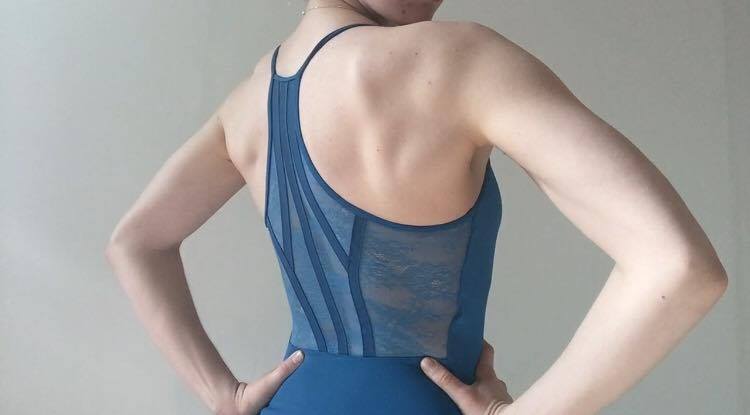
Tuesday, 13 June 2017

Interview | Dance Student Zoe Norbury


Tell us about yourself

Hello!! My name is Zoe, I’m 20 years old and I study BA (Hons) Dance at De Montfort University in Leicester. As well as being a lover for contemporary dance, I also live for being active, whether that be throwing weights in the gym and doing circuits, playing sports (I play Netball at uni) or just getting outdoors, I must be up and doing something. I also have my own little blog on Instagram and Wordpress where I share all things food, fitness and life-related, spreading positivity and self-love every day. I am a huge chocoholic and peanut butter addict so expect to see many pictures featuring the two!


What type of supplementary training do you do? What benefits have you seen from this training?

I find myself in the gym quite regularly, aiming to be there 3-4 times a week and ensuring I get in some rest days. I vary my training in each workout, so one day I will focus on just weights for strength training, slowly increasing the weights when I feel is needed. I will also do some circuit training, adding in a mixture of weight, body-weight/plyometric exercises to keep up my fitness and I just love feeling like a ninja.

Since beginning supplementary training, I’ve noticed a variety of benefits. My strength has increased majorly – I’ve noticed that my balance has improved and I’m able to control movements much more. Another benefit is that my fitness feels are at a high, meaning that I am able to take part in class without being out of breath easily and so can fully focus.


At what age or stage in your dance career did you realise supplementary training was necessary?

I realised that it felt necessary when I was in my final year of sixth form - pretty much when I started my whole journey into fitness and healthy eating. I started with HIIT training and then was encouraged by Youtubers/bloggers, my dad (who was a personal trainer) and my older brother to start introducing weights into my training. As the year went by I noticed how much stronger and confident I was in my dance training. I was able to maintain a good level of fitness, control my movements and balance, and I was able to perform with more power.


Can you summarise your own personal approach to supplementary training and nutrition?

My approach is to be balanced, and I am constantly preaching this. I started my training the wrong way: overtraining, eating way too little and restricting myself from foods if they weren’t ‘clean’. It took me a long time to realise how wrong this was and I began to research more into how I should train and rekindle my love for fitness and food. I now train at least 3-4 times (sometimes 2 if I am busy) a week and if I feel like I am too tired or injured, I listen to my body and make sure I rest. It is so crucial to allow our bodies to recover! As with nutrition, I learnt that food is fuel and to not categorise into ‘good’ or ‘bad’ which completely changed my mindset. I now make sure I am eating enough food every day, ensuring that I eat plenty of carbs (the beauty that gives us energy), protein and fats, as well as lots of veggies and chocolate, of course. Everything in moderation and it’s all about finding your own balance.
From your blog and Instagram it’s clear that you love food! Can you tell us your favourite snack to nibble on between classes?

I love food!! It makes me happy and fuels my body! Most of my technique classes are early morning so I always have breakfast which is a huge feature on my Instagram – zoats (oats with courgette). I will have this with a scoop of protein, berries, peanut butter and some form of chocolate (I find that starting my day with some chocolate stops me from wanting to eat all of it at the end of the day). If I have an afternoon class, I make sure I have some carbs beforehand and I love bananas! Sweet, tasty and gives me energy for the class.


How do you juggle your studies and make time for supplementary training?

I always organise my weeks with my weekly planner. I write down my timetabled classes and work the gym into it, making sure that I have enough rest time but also time to let off steam in the gym. I aim to have gym sessions on days when the technique class isn’t too intense otherwise my body will be exhausted and injuries could occur.


As a student dancer do you feel you are sufficiently educated and supported in injury care/management and methods to reduce injury? 

In all honesty, no. These topics aren’t sufficiently covered on my course and it is down to us to research these topics if we wish to do so (I tend to take out a couple of books from the library when I feel like I need more information). We do learn about anatomy and physiology on my course, however, it is more about the Alexander Technique and how we should direct ourselves in order to be more at a mechanical advantage. I feel that learning about injury care and safe dance practice should be enforced more onto any dance course as not many student dancers (or even some professional dancers) are entirely educated on how to reduce the risk of injury or how to treat them. I would love to be able to have a career in this sector, I want to help others take care of themselves.


Do you have a favourite exercise you’d like to share? 

Oh this is a tough one! I enjoy doing squats with the bar because I love seeing my strength slowly increase, it amazes me how strong our bodies are! However, I am a big lover of plyometric training and do love different variations of burpees (e.g. regular, to the floor, with a sandbag) and also lunge jumps! Call me crazy, but I love seeing how much endurance I have and how powerful I am when jumping. It’s great for the legs and glutes, and as dancers we need to have a strong base.

Thanks to Zoe for a great insight into her life as a Dance degree student! So glad to hear of such a positive attitude to dancer health. But it certainly sounds like there is a need for better education on degree courses...
Find Zoe on social media here and here

SHARE:

Wednesday, 8 March 2017

Active Sunderland's BIG events


I was recently invited to Active Sunderland’s BIG events launch. This event was to publicise 5 active events running from April to August 2017 in the Sunderland area.

On the day of the launch, families were invited to take part in a range of activities, including trampolining, table tennis, badminton, football, mini golf and more. The Raich Carter Sports Centre was jam-packed with people having fun! It was great to see so many out enjoying sport and exercise.

Active Sunderland are a team of individuals working within the community to improve the health and wellbeing of its city. Since 2012 they have been working alongside residents and sports clubs to encourage participation in sport and physical activity. One of the ways they do this is by holding community events such as ‘Active Sunderland BIG EVENTS’.

The events are aimed at all ages and abilities, with various sports taking place such as running, cycling and walking.

Here is the itinerary-

·         BIG family 3 in 1
Sunday 23 April
3 events in 1 – Walk/Run/Cycle
12-4pm, Herrington Country Park
£10 per person (includes t shirt and medal)
Under 8s can receive a free accompanying adult bib

·         BIG 3k Run
Sunday 7 May
9.45- 11.30 am, Keel Square
£10 per person (includes t shirt and medal)
Under 8s must be accompanied by an adult

·         BIG Bike Ride
Sunday 11th June
Two routes 20 or 35 miles
9.30am, University Campus, St Peter’s Riverside
£10 per person (includes back pack and medal)

·         BIG Walk
Sunday 1 October
Three routes 3, 7 or 11 miles
10am, Herrington Country Park
£10 per person (includes t shirt and medal – only included with online registration prior to each event)

·         BIG Community Sports Festivals
Every Wednesday from 26 July – 30 August, 12-4pm, £1 per person
Come and try a new activity or sport.
Activities are inclusive and for all ages and abilities
o   Wednesday 26th July
Seaburn Beach and Promenade
o   Wednesday 2nd August
Princess Anne Park
o   Wednesday 9th August
Barnes Park
o   Wednesday 16th August
Mowbray Park
o   Wednesday 23rd August
Hetton Lyons Country Park
o   Wednesday 30th August
Thompson Park

I like the option of choosing the length to cycle and walk! Having elderly grandparents I can appreciate that the longer of the walks can sometimes be too much and might put people off the event. Having the option to walk or cycle different miles is a great idea and once walking could encourage you to push on further! From personal experience, sometimes the shorter walk gets the conversation flowing and soon you have walked 20+ miles!

I’m hoping to make at least one event with my boyfriend (armed with my go pro), so hope to see you there!

To find out more about the Active Sunderland BIG EVENTS click here.  


SHARE:

Friday, 11 November 2016

Weight Training | The Dancer

Photo by Rennison-Rae Photography


Will weight training change your aesthetics for dance?

It has long been viewed that weight training for dancer will increase muscle bulk and decrease muscle length, thus ruining the aesthetics required of dancers, particularly in ballet. 

More recently on social media we are seeing more women taking up weight training and portraying a more muscular figure. However is this the way we will all look should we train? Each individual has their own training goals, and so do dancers when lifting. Their conditioning programme will vary compared to competitive women body builders. Plus it takes the female body  a blooming long time (plus sometimes a bit of a cheat) to grow to such a size.

What does science say?

A study by Koutedakis et al. (2005) found no change in artistic or dance performance requirements despite increased muscular strength, nor a change in the levels of flexibility. In fact there is call for strength training to increase performance and reduce the risk of injury. See my other blog 'athletic artists' for more information about strength training for dancers. 

Hope you enjoyed this quick read!
-E

Koutedakis, Y., Stavropoulos-Kalinoglou, A. and Metsios, G., 2005. The significance of muscular strength in dance. Journal of dance medicine & science9(1), pp.29-34.
SHARE:

Monday, 5 September 2016

The benefits of exercising in a pool


I am forever telling clients to find a pool during the early rehabilitation stages. However hydrotherapy can be just as useful for the healthy individual and you don’t need to get your head wet to feel the benefits! Read below to find out why…


There are several benefits to exercising in water –

Buoyancy: The water supports your weight, therefore there is less strain put on the joints. This can also aid in the development of balance and strength.

Heart health: You can maintain your level of cardiovascular fitness during injury (if not improve it), when moving through the water. The hydrostatic pressure of the water against the chest wall resists the muscles expanding the chest during breathing. Thus regular exercise within the water strengthens these muscles, allowing them to expand more efficiently, enabling a greater volume intake of air when exercising on land.

Strength gains: Water provides resistance due to the gentle friction provided by the water, therefore strengthening the body. Holding onto the pool edge and swinging your leg forward and back is one example of this.

Joint range of motion and endurance can be increased without joint pain & strenuous activity due to the buoyancy of the water. Heavier limbs, such as the legs will be easier to lift and hold.
Reduced swelling: Hydrostatic pressure of the water acts as a compression support, encouraging lymphatic drainage from swollen joints and limbs.

Eased pain: The warmth and sound of the water can help to relax an individual, decreasing the level of pain.

Exercises can be performed within the pool prior to on-land: This is beneficial for the individual recovering from injury when performing an exercise out of the pool would be too strenuous.


Who would I recommend it to?
·         Injured individuals
·         Individuals with osteoarthritis or diabetes
·         Healthy individuals
·         All ages, shapes and sizes


When is Hydro therapy not appropriate?
It is always worthwhile clearing yourself with a registered professional i.e. Graduate Sports Therapist, Physiotherapist or Doctor prior to partaking in hydro therapy. Those with certain conditions should avoid. These include:
·         Wound or skin infection
·         Raised temperature
·         Breathing difficulties
·         Heart conditions
·         Incontinence
·         Infection
·         Kidney problems
·         Low or high blood pressure
·         Viruses/stomach upset


Any questions regarding Hydro Therapy or exercise therapy, please get in touch!
-E 
SHARE:

Friday, 3 June 2016

Five Summer Fitness Tips for the Dancer


A big part of dancing is long days of training or performing. Feeling strong and fit can really help you to perform your best within class and onstage, preventing fatigue and ultimately preventing the risk of injury. If you put the effort in, you can reap the rewards and see your full potential through maximised performance. Whilst it is great to take time away from dance over the summer in order to rest and recover, it can also be a period of reversing all your hard work over the previous year. Returning to class you may feel that your once strong muscles are now sore and tired. Take a read of my five top tips for unleashing your skills this summer, so you can come back stronger the following season...


Aerobic training

Choose an aerobic exercise you most enjoy. For me this would be swimming or cycling, but others could try running or rowing. These cardiovascular exercise are perfect for increasing your fitness levels so that you are less fatigued by the end of dance class.


Get outside

Just because you spend the rest of your year inside a cold, dark studio doesn’t mean you should train in the same conditions, in fact quite the opposite. Get outside to catch those rays, perfect for boosting your Vitamin D levels which have been proven to improve muscular strength, increase jump height performance and reduce injury levels. So instead of doing a pilates session indoors, take your mat into your back garden, or go for a bike ride with friends. But don’t forget your sunscreen!


Incorporate dance specific exercises

Identify the muscle groups involved within specific movements and train them. For example, a port de bra can be mimicked using therabands to strengthen shoulder girdle, or bosu ball can be used to train balance and strength in the lower legs.  


Work on your weaknesses

Perhaps you picked up an injury this past season and now you feel weaker than previously in that area. Well now is the perfect time to revise that situation and to come back stronger than you were before.


Try something new

Now is the opportunity to try a new activity. Perhaps you’ve always wanted to go surfing, or fancy going for that long walk along the coast. DO IT! Get out and let your mind and body relax so that you can return to dance feeling fresh and enthused.


Enjoy!
 -E
SHARE:

Thursday, 12 May 2016

My Past Dance Injuries


In a past post I mentioned I had suffered from a dance related injury. This injury was greatly overlooked and could have been prevented had I taken supplementary classes. I suffered from Chondromalacia Patella. This is roughening of the articulate cartilage on the underside of the patella. This cartilage can become soft and wear away, causing anterior knee pain. Luckily I was not at this stage and was able to rehabilitate. Chondromalacia Patella is caused by the incorrect tracking of the patella due to a muscle imbalance within the quadriceps. Through my dance training I had become dominant in my vastus lateralis which pulled my patella laterally out of its groove, causing pain with active movement. Through simple Pilates and strength training exercises, by the guidance of my Sports Therapist I was able to strengthen my Vastus Medialis and glutes to correct the problem.
Source - Google


Here are a few of the exercises I used to perform -


Single Leg Bridge

1.       Lie on your back with your knees bent to 90 degrees with your feet on the floor. Arms palm up at your side.

2.       Draw in your abdominal muscles, maintaining this throughout the exercise.

3.       Squeeze your glutes together and slowly raise your bum off the floor until your torso is in line with your thighs. Lift off one leg so that it is in-line with the other thigh. Ensure the hips stay level.

4.       Hold for 10 seconds and lower.

5.       Repeat 10 times on each leg.


Glute band walk

1.       Place the band above the knees.

2.       Keeping the glutes squeezed and the knees pushed out, walk side to side (crab walks) and forwards and backwards (monster walks).

3.       Ensure walks are slow and controlled.


Swiss ball squats

1.       Stand with your back facing the wall. Place a swiss ball at the lower back between you and the wall. Place feet slightly in front of the body.

2.       Hold a light medicine ball between your knees.

3.       Lower yourself until your legs are at 90degrees.

4.       Hold for 10 seconds and squeeze the ball.

5.       Drive up out of the squat to the starting position.

6.       Repeat 3 sets of 12 reps.


Please remember everyone’s injuries are different, therefore each may require different treatment. What worked for me may not work for you. However, these exercises are good, simple strengthening exercises which can be incorporated into your supplementary training regime to help prevent muscle imbalances.
If you have any questions, don’t hesitate to get in touch!
-E

SHARE:

Thursday, 5 May 2016

6 things I love about working as a Sports Therapist


1.       Educating and aiming to protect players from further damage
I love treating people, but it gives greater satisfaction when I can educate my clients to enable them to take steps to improve their health on their own.

2.       The people you meet
I have met some wonderful people throughout my time working and look forward to meeting many more interesting people. I absolutely love listening to old stories told by client’s and learning different things from each of them.

3.       Helping others
I like to help people. I always have and I always will. Seeing a client improve or having one tell you they are now pain free makes my day!


4.       The places you travel
Despite waking up at 4.30am for some away games and the eventful University American Football journeys I have been on, I love visiting new places. It's just another mini adventure for me! I even love those freezing cold snowy days on the side-lines when I can't feel my toes or fingers. Being outside and able to watch sport is an ideal weekend activity for me, so combined with doing the job I love, it is a winning combination!

5.       Family and friends
At all the clubs/teams I have been involved in, I have been welcomed and made to feel as part of one big family. With my first team (Teesside University Cougars), it felt like I had 30 big brothers who would look after me. I have made some lifelong friends (young and old) while being part of these teams and am forever grateful for their support promoting me and my work. 


6.       Continuous learning
In this job, you never truly leave education. To hold onto my professional insurance and membership, it is a requirement to continue my professional development. However, as you might be aware within this job, you will constantly be returning to books and journal publications to seek new ways of treatments or to investigate further into an injury. I absolutely love this, as since leaving university I miss the deadlines, which I guess it is part of the reason I write this blog. Yey to learning!


-          E

SHARE:

Monday, 4 April 2016

5 tips to keeping motivated for supplementary dance training

Photo : Chris Rennison Rae

Here are my 5 tips to keeping motivated for training after a long day in the dance studio.

1.       Do the type of training you enjoy

There is no good doing an activity you don’t enjoy as motivation will drop and you will end up not sticking to your programme and possibly giving up.

2.       Build supplementary training into your weekly schedule

Don’t think of your training as separate to dance class but part of it. Yes, it makes the day longer, but it is only there to enhance your performance like your other compulsory classes.

3.       Few sessions but hard work

You don’t have to train daily to get results. You may train well, following correct technique and progression, allowing rest days and still see great results. Work around your schedule and don’t follow the hype that the more work completed, the better the training session. Train hard and don’t do more than necessary, or risk overtraining!

4.       Train together

Plan your sessions with fellow class mates or friends. By sticking together you can encourage each other as well as correct form and spot one another. Additionally, if one of you is feeling unmotivated then you’re more likely to stick at it and turn it into an enjoyable session.

5.       Follow a programme

Get advice from a qualified professional with knowledge of dance who can create a tailored programme to your needs. Once you have this programme (which should be specially tailored to your available time) you can work hard and see the results. And once you do, you’ll be hooked! I find it helpful to keep a diary when I train so I can look back at my progression.

Let me know how you get on!
-          E
SHARE:

Thursday, 10 March 2016

Finding a ballet school as an adult in the North East


I have had trouble finding a ballet school in the north east.
Prior to university I achieved my Grade 8 RAD exam and was working towards the Advanced Vocational levels. When attending Teesside University I was unable to find a local dance school which taught RAD ballet at the level I wished to continue learning at. When I found a class, it was in Durham, late in the evening and too far away to be travelling back and forth using public transport, and it unfortunately clashed with my university placements. So 4 years went by without any ballet training, other than the small bits I would do in my living room, when brushing teeth, or when returning home for set holidays were I would attend my old school once again.
Despite this, over the last four years I have stayed fit through joining different university teams such as the kayak club and rowing team, and began weight training in the gym. Through these activities I have remained fit, strong and supple, perhaps more mobile in fact.
Now since leaving university and moving to Newcastle I have still struggled to find a dance school which I can attend whilst fitting it around my busy work schedule. Few RAD schools in the area go up to Grade 6+ and I was told by one school that they didn’t take anyone over the age of 18. This I thought was stupid, there are plenty of adults who wish to continue dancing or begin later in life! Dance City, based in central Newcastle was another option however I couldn’t make those classes either due to clashes with work. I was about to give up hope!  But I have finally found a school in Whitely Bay which is on a day that I can make so I’m very excited to begin dancing again. I have new ladder-free tights and two beautiful new leotards, so I am all set to get my allegro on! I shall let you know how it goes!
-E
One of my new Bloch leotards


SHARE:

Wednesday, 9 March 2016

Overtraining and the Dancer


What is overtraining?

Overtraining is a condition where active individuals may complain of: reduced physical performance for no apparent medical reason, suffer constant fatigue and show emotional and behavioural changes.
The term overtraining can be used interchangeably with the term burnout.
Overtraining can occur when the pressure of training becomes too high and the body is not allowed to recover. Mirco-damage to the bodies muscles, created through training, requires sufficient time to repair in order to prevent further damage. When this happens and the body is allowed to recover, adaption occurs. Positive adaptations means an increase in performance through increase power, strength and endurance.
There are two types of burnout, acute and chronic.
  • Acute burnout may last for less than one month, for example, it may begin at the beginning of a new season for the dancer. This acute burnout may result in muscle damage causing pain and stiffness, but can quickly disappear.
  • Chronic burnout may accumulate over a period of weeks or months. Possible signs and symptoms may include menstrual irregularities and a lowered immune system causing more frequent illness, in addition to other signs and symptoms.

Contributing/risk factors

There are many factors which can contribute to burnout, such as:
·         Difficulties within personal and family relationships
·         School and work difficulties
·         Financial difficulties
·         Highly motivated individuals – highly motivated induvial will often push themselves further to achieve their ultimate goal. This can be positive, however when the individual is pushing and overexerting themselves, this may lead to injury and illness.
·         Individuals with lower fitness levels – not everyone holds the same levels of fitness, and within a dance class it may sometimes be difficult for those with lower levels of fitness to keep up with the rest of the class working at a high pace or during a longer class. These individuals should be aware of their limits and allow themselves time to recover, which in turn will develop their fitness levels instead of experiencing overtraining symptoms.
·         An increase in physical activity such as when preparing for a performance - when there is sufficient time for the body to adapt, the body will cope with an increase in rehearsal time or demanding choreography. However when this period of time is not allowed, the body will struggle.
·         Young professionals within the first year with a company - these dancers may be less willing to, or unable to say no when asked to increase their periods of rehearsal. In addition, there will be increased roles to learn, therefore more studio time in class.
·         Dancers are at great risk from overtraining due to the fact that they are conditioned to cope with a heavy workload without complaining. Dancers have a high level of self-discipline, in addition to the awareness that another dancer could easily take their role if they are not up to standard.

What are the signs and symptoms?

·         A decrease in physical performance – both a loss of stamina and technique
·         Constant fatigue
·         Negative moods
·         Frequent injuries
·         Disturbed sleep patterns through possible stressful dreams and night sweats
·         Unrested body and an unfocused mind
·         A decrease in sense of humour
·         A change in mood, such as dramatic outbursts
·         A loss of appetite
·         Elevated blood pressure and heart rate
·         Excessive sweating
·         Overuse injuries
·         The inability to recover fully after intensive dancing

How can you deal with burnout?

There are numerous ways to manage burnout/overtraining such as:
·         Counselling
·         Sleep
·         Massage – to help the body and brain to relax
·         Supportive environments – through dance teachers, family and friends
·         Rest periods away from physical activity.
                         

Can it be prevented and treated?

Correct programming through planning periods of rest and exercise are crucial to prevent overtraining. Recovery periods may be scheduled between classes or on particular days for the individual’s personal schedule. For the dance school/company, it is also important to include rest days whilst on tour. Additionally, choreographers should be careful of making best use of their time with dancers in order to prevent overexertion.
Additional ways to prevent overtraining are;
·         Including supplementary training within an exercise programme which may act as a stress release – for each individual this will be different
·         Ensure good hydration and nutrition to provide adequate fuelling for exercising
·         Ensure ‘down time’ within the programme to build a period of relaxation.
·         Ignore the notion of ‘no pain, no gain’. Working through fatigue, illness or injury has no positive impact on performance but can cause further damage.
·         Teachers should be aware of the signs and symptoms of overtraining and, if a dancer suffers from overtraining they should be careful to look after the mental status of their dancer, providing support, advice and guidelines.

If you are a dancer based in the North East of the UK and are experiencing symptoms of overtraining, or are looking to prevent it, I am happy to assist by creating a home supplementary programme for you, or by providing massage therapy. Contact me via email at performancesportstherapy@hotmail.com .
-          E


References :

  • Rist, R. and Koutedakis, Y. (2006). Dealing with Burnout. Available: http://www.dance-teacher.com/2006/03/dealing-with-burnout/. Last accessed 4th March 2016.
  • Koutedakis, Y., 2000. Burnout in dance. the physiological Viewpoint Journal of dance medicine & science, 4, pp.122-127.
  • Quested, E. and Duda, J.L., 2011. Antecedents of burnout among elite dancers: A longitudinal test of basic needs theory. Psychology of sport and exercise, 12(2), pp.159-167.
SHARE:
© Performance Sports Therapy. All rights reserved.
Blogger Templates by pipdig