Wednesday, 7 June 2017

Everyday care for the dancer’s feet


The foot and ankle are a vulnerable area for the dancer, accounting for 65% of all injuries within professional dancers and 53.4% within elite pre-professional dance students. Dancers are constantly on their feet and despite the effortless look, there is no doubt that this art puts incredible strain on the lower limbs. 
A combination of flexibility, stability and dynamic strength are required at the ankle and foot for a healthy dancer’s foot. However, despite the intense training, injuries in this area are highly common.
Foot injuries can be caused by a number of factors including;
             ill-fitting shoes,
             an increase of training intensity too quickly,
             poor dance technique,
             over training

Chronic injuries at the foot, due to overtraining, are more common than acute injuries.
Below are some tips of how you can take care of your feet each day, with an aim to prevent injury.

Everyday care

Remove the waddle
As a dancer it is very important to look after your feet when outside of the studio. Dancers often adopt the dancers “waddle” out of habit due to their turnout training. However, mechanically, the feet are not designed to be turned outwards, therefore it is important to note when walking and jogging to place your feet in parallel.
Rest and recover
Additionally, allowing your feet to rest and recover is highly important and beneficial, in order to help prevent injuries due to overtraining. Possible ways of doing this is by soaking the feet, simply taking the weight off your feet or having a massage in the arch of the foot and Achilles tendon insertion.
Wear the correct footwear
When buying shoes, ensure you wear properly fitted shoes. Not only dance shoes, but any casual pumps too. After a long day training you do not want to put extra strain on your feet. I would suggest purchasing a well-fitting pair of running trainers for these occasions.
Prepare your feet
In the morning you might feel stiffness in the foot and ankle. Why not prepare the feet first thing? Even before class? This will feel like a breath of fresh air and help enhance movement quality.
Try this plantar fascia roll.
1.            Using a hockey ball, roll deeply into the plantar fascia on the foot for 2-3 minutes. Ensure you cover the whole underside of the foot.
2.            Repeat on the other foot.

You'll feel like you're walking on air!
Strengthening the ankle and foot is highly important in order to prevent fatigue, a leading cause in injury. View my article on improving ankle strength here and warming up the ankle and foot here.
Look after blisters
Blisters are a common complaint for ballet dancers caused by moisture and repeated friction from (most commonly) pointe shoes. Taping susceptible areas of the feet can help prevent blisters yet don’t work 100% of the time.
When blisters come up it is unadvisable to burst blisters. Doing so could lead to infection. It is best to leave the blister to heal in the open air, however dance class schedules and pain can restrict this. Therefore you can drain a blister using a sterilised needle to ‘pop’ the blister. It is important to keep the roof of the blister intact to allow as cover which will help avoid infection. It is then best to cover this area with a clean dressing.  
Avoid bunions
Toe spacers or improvised toe spaces help to improve the alignment of the big toe. I would recommend fixing these in place before class with a bit of tape.
If you suffer from bunions then seek a good pointe shoe fitter who can offer you a shoe with the correct support and angling to remove pressure from the bunion.
At the end of the day have an ice pack to hand to sooth any bunion pain.


Do you have any rituals you go through each day to look after your feet? Let me know below!
 Photo credit: Rennison-Rae Photography


SHARE:

Wednesday, 8 March 2017

Active Sunderland's BIG events


I was recently invited to Active Sunderland’s BIG events launch. This event was to publicise 5 active events running from April to August 2017 in the Sunderland area.

On the day of the launch, families were invited to take part in a range of activities, including trampolining, table tennis, badminton, football, mini golf and more. The Raich Carter Sports Centre was jam-packed with people having fun! It was great to see so many out enjoying sport and exercise.

Active Sunderland are a team of individuals working within the community to improve the health and wellbeing of its city. Since 2012 they have been working alongside residents and sports clubs to encourage participation in sport and physical activity. One of the ways they do this is by holding community events such as ‘Active Sunderland BIG EVENTS’.

The events are aimed at all ages and abilities, with various sports taking place such as running, cycling and walking.

Here is the itinerary-

·         BIG family 3 in 1
Sunday 23 April
3 events in 1 – Walk/Run/Cycle
12-4pm, Herrington Country Park
£10 per person (includes t shirt and medal)
Under 8s can receive a free accompanying adult bib

·         BIG 3k Run
Sunday 7 May
9.45- 11.30 am, Keel Square
£10 per person (includes t shirt and medal)
Under 8s must be accompanied by an adult

·         BIG Bike Ride
Sunday 11th June
Two routes 20 or 35 miles
9.30am, University Campus, St Peter’s Riverside
£10 per person (includes back pack and medal)

·         BIG Walk
Sunday 1 October
Three routes 3, 7 or 11 miles
10am, Herrington Country Park
£10 per person (includes t shirt and medal – only included with online registration prior to each event)

·         BIG Community Sports Festivals
Every Wednesday from 26 July – 30 August, 12-4pm, £1 per person
Come and try a new activity or sport.
Activities are inclusive and for all ages and abilities
o   Wednesday 26th July
Seaburn Beach and Promenade
o   Wednesday 2nd August
Princess Anne Park
o   Wednesday 9th August
Barnes Park
o   Wednesday 16th August
Mowbray Park
o   Wednesday 23rd August
Hetton Lyons Country Park
o   Wednesday 30th August
Thompson Park

I like the option of choosing the length to cycle and walk! Having elderly grandparents I can appreciate that the longer of the walks can sometimes be too much and might put people off the event. Having the option to walk or cycle different miles is a great idea and once walking could encourage you to push on further! From personal experience, sometimes the shorter walk gets the conversation flowing and soon you have walked 20+ miles!

I’m hoping to make at least one event with my boyfriend (armed with my go pro), so hope to see you there!

To find out more about the Active Sunderland BIG EVENTS click here.  


SHARE:

Monday, 30 January 2017

A lacey leotard


I was already a big fan of the Dansez and FirmFit dance/active wear so I was delighted when they sent me an amazing leotard to review. So here is my complete and honest review (plus some pretty awesome pictures by Rennison-Rae Photography).

The leotard is part of the Embrace range, a deluxe range of leotards. As soon as I opened this leotard I was in love with it! The lace cutout design is incredibly beautiful, plus I’ve always wanted a leotard with a high neck and shorts-style bottom (I think it just looks so classy), so I felt like a very lucky girl.

My one concern was that as there was no bra-lining I might fall out of it when performing any allegro (not so good when there is only a small panel of opaque material to cover the chest!). Happily, with some adjusting, the leotard is supportive enough in this area and I haven’t fallen out of it (phew!). However, I wouldn’t advice this leotard for someone with a larger bust as the front opaque panel isn’t too large.

The leotard is mainly made of lace in a pretty floral pattern. This has a small amount of stretch allowing for good range of movement at the shoulders and back. I particularly like the key hole back detail, which again adds to the beauty of the leotard. (Just be careful with the Velcro neck that it doesn’t attach and pull on the pretty lace).

I thought I would love a shorts style leotard, and in theory I do, however when dancing the legs rolled up and so I was constantly adjusting them between dances. Although I think this could be due to my muscular legs...

The leotard has washed brilliantly, unlike previous leotards I have owned, where the colour and material has seemed to wear in the wash.

Ultimately I love this leotard and think it was the perfect choice of attire for my most recent shoot with Rennison-Rae Photography. I’d love to see this leotard in another colour - possibly a nude pink, navy, emerald green or bright red!


Check out FirmFit active wear here - https://www.dans-ez.com/collections/all-activewear

And find more Dancez leotards here - https://www.dans-ez.com/


Check out the leotard in action in this dance inspired shoot with Rennison-Rae Photography - 


Thanks Chris for another great set of photos!

SHARE:

Thursday, 5 January 2017

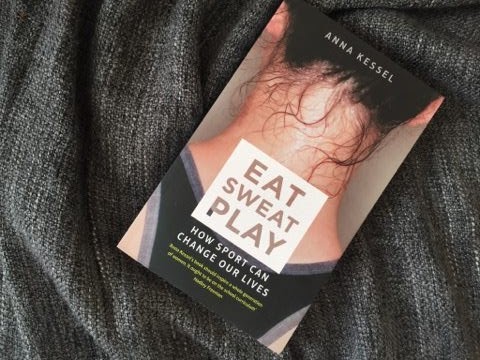
Eat Sweat Play | Book Review & My Reflections


Who wrote it?
Anna Kessell, sports writer for the guardian and the observer. Co founder and chair of women in football.

Who's it for?
Any woman interested in sport and exercise, men in sport, sport students and PE teachers.
I think this book is so good that I believe extracts should be compulsory reading for students within PE lessons.

What's actually in there?
A huge amount is covered within the book! Topics include: exercise and pregnancy; PE lessons; sporting taboos (including periods, the menopause and their influence on exercise); not needing to play sport to enjoy sport; hard hitting stories and sports women in the media.

Quote from book:
'It's time for women over the world to reconnect with our bodies'

Would I recommend it?
I would definitely recommend this book to any woman interested in sport or exercise. The book is so inspiring, and has left me feeling inspired to take part within a team sport again as a competitor.


My reflections on the book


How my eyes were opened to the subject of women in sport by reading the book ‘Eat Sweat Play’ by Anna Kessel. 
  
Despite having taken an active role in sport and exercise for the whole of my life I have been pretty absent from the area of women in sport. From the age of 3 to 18 I regularly took ballet lessons, and although I was dancing in a class of other girls, I felt completely alone in the activity. All work in class was geared to individual training and not team work. 

When I began rowing in my second year of university, I felt my competition, within the team was the male rowers. Without blowing my own trumpet, I felt I did pretty well compared to the men. This was probably due to the very strong leg strength I had as a result of my ballet training. I also took the rowing training very seriously, whereas some did not. The attitude of some women on the team, I must say, has put me off joining purely women's teams. Since leaving university I have worked wholly with male teams, as a sports therapist/coach, so the female sporting environment is relatively unknown to me.

Something which particularly shocked me in the book was the fact that there is little to no advice for expectant and new mothers wishing to exercise for the health of themselves and their child.  I didn't realise that there is such a huge need for research in the area of sport and exercise for new and expectant mothers. I also didn't realise how concerned and passionate I would become about it, as a 23yr old professional woman, not looking to start a family for a good few years yet. My partner always jokes that I will never want to have children as I'd never want to give up the gym. This makes me laugh and I agree because, in the back of my mind for some stupid reason, I have believed that if and when this time comes, I will have to give up heavy weight training and sacrifice all that hard work I have put in. Reading ‘Eat Sweat Play’ has led me to re-evaluate my thoughts, stop being stupid and think as the sport scientist I am that actually it is very healthy for women to take part in activity throughout pregnancy and post childbirth. I'm sure when the time comes I will be less selfish in my views. However, I am deeply concerned by the lack of research in this area and I do worry for other women and myself in the future. In fact it's kind of scary. When can we return to activity? For how long can we continue to weight train? What benefits will exercise have on childbirth and carrying the child, or even the health of the baby? What are the areas of training that should be avoided?

I believe women need to assert themselves in the gym. I'm not an overly confident person and before I began training in the gym I didn't have a clue how to lift weights, but with patience and persistence, I have worked it out. I have never once felt the need to shy away from the weights area because it was a 'men's only' room. This could be because I can look past what others think, and would encourage others to do the same. I know that some men in there are often more concerned about themselves and how they look in the mirror, than what you're doing - I've seen the evidence - particularly one guy hugging his own reflection in the mirror. The majority are either as confused as you or completely absorbed in their own workout. My advice would be to ask if you're unsure, or use available resources to help you.

A growing trend that I have noticed are those women, who are influenced by the media, treating the gym as a fashion show/social hub.   Similarly, the current obsession with 'booty gains' (ala Kim Kardashian-West) drives me nuts. The Kardashians are, in my opinion, not good role models with their rumoured plastic surgery and body reshaping giving an unrealistic view of the female form. Yes having strong glutes are important for athletic performance but seriously, what about the rest of you? A fit and healthy body is more important than a passing fashion trend.

I totally agree that women should support each other in sport. I love the ‘Girl Gains’ concept developed by Zanna, Tally and Victoria, which holds events for women to get together to enjoy being active and healthy.
Recently many people have commented about being friendly in the gym to other women.  Working with people every day in my job, it is nice to be able to train quietly by myself, pushing myself to achieve. It’s my downtime. When I'm in the gym I don't always wish to talk to others. So yes I don't always look happy or want to start a conversation, but not because I'm unfriendly or don't support others. I can and do smile, and say hello.
I do take my gym training very seriously for both personal and professional reasons, and I hope my attitude/approach to training in the gym would encourage others. However I have noticed that there can be too much shaming of some women in the gym when they are simply dedicated and motivated individuals wanting to achieve their best when training. So don't take offence if they look very serious and focused.

Part of the book ‘Eat, Sweat, Play’ speaks about women making their voice heard at football matches. Although I have no experience of this sport, I have watched many rugby and American football games where there are few women on the side-lines screaming support. However, at the rugby club I work with we have an awesome lady called Lynn, who is the glue that holds the teams together. Lynn is a very special lady, who volunteers many hours of her week, organising the rugby admin, acting as a mother to all the boys and still times find to scream support on the side-line at home and away games. It is great to hear a woman's voice among the men's more colourful language, and I think it has encouraged me to open up during games too. Hands down to Lynn for all the work she does.

So far within my career I have felt little prejudice towards me as a woman working within sport. The one area I have experienced some difficulty is working as a Strength and Conditioning coach. I am happily accepted as a Sports Therapist, caring for individuals, acting out a more ‘womanly’ role, but not so as a strength coach. I feel that some believe that, as I am woman, I can't know more than men about building individual and team strength to better performance. However, there are some environments where I am completely accepted as a specialist in these areas, and by some very good coaches and athletes. I believe this difference in attitude is down to the background, experience and education of individuals. It can be disheartening at times as this is the area I am most passionate about, but I’m finding ways to move onwards and upwards.

Personally, like many women working within the field of sport and exercise endeavouring to build a good reputation as professionals and athletes, I find it difficult to support female ‘sports’ such as the American Football Lingerie League. For practically naked women to flaunt around for men to watch in the name of sport is a huge step back for women’s equality and sexualizes women within sport. Again, working with purely men's teams I hear a lot of changing room talk, and these 'sports' just aren't helping women to be respected. Don't get me wrong, I admire the athleticism and training that goes into the sport itself, but just wish they would cover up. Even if you are a very talented player, many people will make assumptions as to your reasons for participating in such a ‘sport’.

I am incredibly lucky to have a very supportive partner who I met through sport when at university. He is himself a sportsman and I now coach him in strength and conditioning. Also, I have rehabbed him through injury and now coach American Football alongside him, where he's taught and continues to teach me about his sports, and I him about mine. We hold a mutual respect for each other's knowledge of sport and exercise and spend our weekends playing/coaching/training. It's great to have someone who completely supports me and also allows me to vent my frustration at times!

Here’s to continued development of women in sport!

And thank you Anna for writing such an inspiring book!

-E


SHARE:

Wednesday, 28 December 2016

Fresh Air and Fitness


‘The secret to living well and longer is: eat half, walk double, laugh triple, and love without measure.’ – Tibetan proverb


‘I took a walk in the woods and came out taller than the trees’ – Henry David Thoreau 


After a busy few days celebrating Christmas with family, indulging in some rich food (despite not over-doing it) and long days playing board games, yesterday I just felt exhausted. Despite it being Christmas I have not over-indulged and have been active by taking several walks with the family.
Country walks have long been a weekly and Christmas tradition within our household, and despite not always enjoying these long cold walks when younger, I have since become very fond of a good stroll.

Yesterday, feeling lethargic after a festive weekend, I physically didn’t feel prepared for anything let alone a long walk but, since it was a beautiful day and I want to make the most of my holidays, I got over it, slipped on my boots and headed out into the beautiful crisp day. We took a rough 6 mile walk, exploring the beautiful Essex countryside near our village. The fresh air immediately woke me up and moving energised my body for more.


When was the last time you went for a purposeful walk?  Not to catch your train or bus, walk to the local shop, or browse the shops but to simply walk and enjoy nature. Walking is a joyous activity which gives you energy and can promote happiness. When our lives are becoming increasingly hectic, it’s important to take time away from social media, noise and the rush of daily life.


I personally love walks with my boyfriend because it’s a time when we have no distractions and can simply chat away. It opens my senses so that I become more aware of my surroundings, boosting my mood. I like to take walks in the evenings after dinner and at weekends. Sometimes I will take a walk at lunch to feel refreshed for an afternoon of work. I urge you to try it!

This holiday my friend and I decided to go for a long walk. Instead of sitting inside, splashing our cash on coffee and food, we enjoyed nature’s free beauty. Try it! Make walking a social event! Invite friends or family to join you, or just throw some smiles and ‘hellos’ around when passing people.

Even in the city you can find park land to walk, such as Jesmond Dene in Newcastle and Hyde Park in London. I was very lucky growing up in the countryside and how live by the sea, but you can always find pretty places to walk if you look. This Christmas my Grandad introduced me to a little gem of a walk along the Thames near the Thames Barrier.


There are a several benefits to walking. Studies suggest that walking improves our cognitive function, enhancing our working memory, the ability to learn, creative thinking and problem solving which is perfect for that lunchtime walk. However, in order to get these benefits, we must be walking at our own pace rather than rushing around.

Plus walking is a simple and free way to improve your health. Regular walking has been shown to reduce the risk of illnesses such as heart disease, type 2 diabetes, asthma and strokes. It is recommended by the NHS that you walk 10,000 steps a day. With the average person already walking between 3,000 and 4,000 steps a day so it’s not hard to boost this number with a purposeful stroll.

 
Here are my tips to get the most out of walking:
1.       Take a friend or family member with you.
2.       Depending on the weather, wrap up warm and apply sunscreen.
3.       Take a short walk on your lunch break.
4.       Avoid using the car for trips you can easily use your legs for.
5.       Make it regular. Get yourself into a regular pattern of going for a walk, either in the mornings, at lunch or the evening. 

-E 


SHARE:

Friday, 11 November 2016

Weight Training | The Dancer

Photo by Rennison-Rae Photography


Will weight training change your aesthetics for dance?

It has long been viewed that weight training for dancer will increase muscle bulk and decrease muscle length, thus ruining the aesthetics required of dancers, particularly in ballet. 

More recently on social media we are seeing more women taking up weight training and portraying a more muscular figure. However is this the way we will all look should we train? Each individual has their own training goals, and so do dancers when lifting. Their conditioning programme will vary compared to competitive women body builders. Plus it takes the female body  a blooming long time (plus sometimes a bit of a cheat) to grow to such a size.

What does science say?

A study by Koutedakis et al. (2005) found no change in artistic or dance performance requirements despite increased muscular strength, nor a change in the levels of flexibility. In fact there is call for strength training to increase performance and reduce the risk of injury. See my other blog 'athletic artists' for more information about strength training for dancers. 

Hope you enjoyed this quick read!
-E

Koutedakis, Y., Stavropoulos-Kalinoglou, A. and Metsios, G., 2005. The significance of muscular strength in dance. Journal of dance medicine & science9(1), pp.29-34.
SHARE:

Thursday, 8 September 2016

All you need to know about muscle cramps


What?
Muscle cramp is the sudden and involuntary painful contraction of muscle (or part of it), which disappears within seconds or minutes and is often accompanied by knotting of the muscle during touch.
Cramp is the repetitive firing of motor unit action potentials, also known as “cramp discharge”.
The cause of cramping is unknown, however it is traditionally believed to be associated with exercise in hot and humid climates i.e. Dehydration and the depletion of electrolytes. However this isn’t fully backed by scientific evidence. Another theory suggests there is a neuromuscular cause. This thought proposes that the muscular overload and neuromuscular fatigue causes an imbalance between the excitatory impulses from muscle spindles and inhibitory impulses from Golgi Tendon organs. However, due to muscle cramping occurring within a variety of situations and environments conditions, some believe it is unlikely that there is a single cause.

Cramp vs. Spasm
It is possible to distinguish cramp from spasms. A spasm is an involuntary and abnormal muscle contraction, however cramps are severely painful (and can result in continued soreness), carry an involuntary and explosive onset with a gradual termination of the muscle stretching. This involves only one/one part of the muscle and it is possible to experience fair and forceful contractions. In addition, muscle cramps tend to occur within the muscles of the calf and foot which can in turn impair athletic performance.  

Who?
Cramps can occur in individuals with motor neuron disorders and metabolic disorders, but can also occur within healthy individuals during sleep, pregnancy and physical exertion.
Some of the reported risk factors for exercise-associated cramps include-
  • Inadequate conditioning for the activity
  • Increased exercise intensity and duration
  • Previous history of cramps during or after exercise
  • Family history of cramping.


Treatment
  • Moderate static stretching 
  • Prevention and treatment methods include fluid and electrolyte balance strategies. The National Athletic Trainers’ Association recommends that athletes prone to muscle cramps add 0.3 to 0.7g/L of salt to their drinks as a preventative tool. Others recommend adding sodium (3.0 to 6.0 g/L) to sports drinks based on the frequency of muscle cramps.Note: fluids and electrolytes are not immediately absorbed. Around 13 minutes is required to be absorbed into the circulatory system.


Prevention
  • Neuromuscular training – there is strong support that the level of conditioning is a factor for the development of muscular cramping and that targeting the neuromuscular system can prevent this. The idea is to prevent neuromuscular fatigue. This could be done through plyometric and endurance training.
  • Ingestion of water or a hypotonic sports drink an hour prior to competition ensures absorption.
  • Maintaining hydration and adequate electrolytes aid in the prevention. Thus, fluids should be readily available throughout practices and competitions.
  • A balanced diet is important to ensure fluid and electrolyte replacement.  


References
Minetto, M.A., Holobar, A., Botter, A. and Farina, D., 2013. Origin and development of muscle cramps. Exercise and sport sciences reviews, 41(1), pp.3-10.
Braulick, K.W., Miller, K.C., Albrecht, J.M., Tucker, J.M. and Deal, J.E., 2013. Significant and serious dehydration does not affect skeletal muscle cramp threshold frequency. British journal of sports medicine, 47(11), pp.710-714.
Miller, K. C., Stone, M. S., Huxel, K. C., & Edwards, J. E. (2010). Exercise-Associated Muscle Cramps: Causes, Treatment, and Prevention. Sports Health, 2(4), 279–283. http://doi.org/10.1177/1941738109357299

SHARE:

Monday, 5 September 2016

The benefits of exercising in a pool


I am forever telling clients to find a pool during the early rehabilitation stages. However hydrotherapy can be just as useful for the healthy individual and you don’t need to get your head wet to feel the benefits! Read below to find out why…


There are several benefits to exercising in water –

Buoyancy: The water supports your weight, therefore there is less strain put on the joints. This can also aid in the development of balance and strength.

Heart health: You can maintain your level of cardiovascular fitness during injury (if not improve it), when moving through the water. The hydrostatic pressure of the water against the chest wall resists the muscles expanding the chest during breathing. Thus regular exercise within the water strengthens these muscles, allowing them to expand more efficiently, enabling a greater volume intake of air when exercising on land.

Strength gains: Water provides resistance due to the gentle friction provided by the water, therefore strengthening the body. Holding onto the pool edge and swinging your leg forward and back is one example of this.

Joint range of motion and endurance can be increased without joint pain & strenuous activity due to the buoyancy of the water. Heavier limbs, such as the legs will be easier to lift and hold.
Reduced swelling: Hydrostatic pressure of the water acts as a compression support, encouraging lymphatic drainage from swollen joints and limbs.

Eased pain: The warmth and sound of the water can help to relax an individual, decreasing the level of pain.

Exercises can be performed within the pool prior to on-land: This is beneficial for the individual recovering from injury when performing an exercise out of the pool would be too strenuous.


Who would I recommend it to?
·         Injured individuals
·         Individuals with osteoarthritis or diabetes
·         Healthy individuals
·         All ages, shapes and sizes


When is Hydro therapy not appropriate?
It is always worthwhile clearing yourself with a registered professional i.e. Graduate Sports Therapist, Physiotherapist or Doctor prior to partaking in hydro therapy. Those with certain conditions should avoid. These include:
·         Wound or skin infection
·         Raised temperature
·         Breathing difficulties
·         Heart conditions
·         Incontinence
·         Infection
·         Kidney problems
·         Low or high blood pressure
·         Viruses/stomach upset


Any questions regarding Hydro Therapy or exercise therapy, please get in touch!
-E 
SHARE:

Monday, 15 August 2016

Athletic Artists


The importance of muscular strength within dance

With the ever growing demands on dancers by choreographers, the body is put under increasing strain. It is therefore just as important that the dancer trains their fitness levels, as training the skill.  In the past, a lack of focus on dancer’s health has led to injury complications of bone and muscle, causing time away from the art. Similarly to sport, dance technique requires a number of demands. However unlike dance, sport has had a key focus on its athletic conditioning for at least 2,500 years. In my eyes, dancers are not just artists, but also athletes, and so they require a high level of physical fitness to meet the high demands of daily training.

In the past, strength training for the dancer has been frowned upon and disregarded due to the fear of upsetting the key aesthetics and flexibility which are supposedly crucial to build a successful career. However it has been suggested that contemporary dancers, who show a greater level of athleticism and come from a background of other disciplines such as gymnastics, show greater strength levels.


Why is building muscular strength important for the dancer?

All factors from strength training intertwine with one another to produce...

-    Improved force production - through improving force production, the dancer can enhance the aesthetics of their performance i.e. increased jump height
-    Reduced risk of injury - within dance, fatigue has been shown to be a leading cause of injury, thus causing time away from work. And so with higher fitness levels, the chance of fatigue within performances decreases.
-    Decrease in osteoporosis - low bone mass may lead to the condition osteoporosis, a key concern within dancers, particularly females. Through increased loading of the bones, the bone structure strengthens, thus decreasing the risk of osteoporosis.
-    Increased aesthetics - research has found strength training to decrease body fat, leading to a leaner look. Additionally, it was found that strength training did not alter the aesthetic appearances within dancers by causing hypertrophy, but leads to greater levels of strength within the trained area.
-    No changes to flexibility - despite popular thought, strength training has not been found to decrease levels of flexibility. However it is recommended that the following principle is followed in order to maintain/increase flexibility levels - 'Strengthen what you stretch, stretch what you strengthen'.
-    Increased stability – strength training exercises can be used to develop neuromuscular control. These proprioception exercises allows the body to develop greater awareness of the joint in its surroundings and in turn making the joint more stable.
-    Reduced joint pain – through strengthening the muscles around the joint, weaknesses are removed, thus reducing pain caused by possible imbalances.


So what are you waiting for?


Note: I would recommend always seeking help from a qualified professional prior to beginning a program. This will ensure all your current training, injuries and needs will be taken into consideration when building a program.


SHARE:

Saturday, 11 June 2016

The Dancer’s Essential Warm-up – Part 1 The Foot and Ankle


Photography by C. Rennison-Rae

The Anatomy
The foot consists of 26 bones and is divided into three separate parts- the hind foot, the midfoot and the forefoot.
·         The hind foot consists of the talus, calcaneus (heel bone), navicular, cuboid and 3 cuneiform bones.
·         The midfoot is comprised of 5 metatarsals.
·         The forefoot consists of the toes, each with three parts (the phalanges). Only the big toe (also known as hallux) has two phalange, just like the thumb.
The talus is a very important bone as it transfers the body’s weight to the foot, and is stabilised by multiple ligaments which are often exposed to injury due to insufficient strength at the joint.
The ankle Talocrural joint is classified as a hinge joint. Due to it being this kind of joint, movement is only possible in one plane i.e. plantarflexion (pointing the toes) and dorsiflexion (flexing the foot). The gastrocnemius, soleus and toe flexors work together to produce this movement. Dorsiflexion is carried out by the tibialis anterior, extensor hallucis longus, the peroneus tertius and the long toe extensors.
Inversion (sickle foot) and eversion (winged foot) of the ankle occurs at the Subtalar glide joint. Inversion is produced by the tibialis anterior and tibialis posterior. Eversion is carried out by the peroneal muscles.
Source: Bing Images
The importance of warming-up the foot and ankle
Strong coordinated feet are essential to a dancer’s technique.
The foot is required to be stable, yet at the same time, flexible and elastic. The joints of the foot are shock absorbers, built for dynamics and balance of the foot. Mobility of the foot is genetically determined, but good training from a young age can improve its form and mobility. Strength and stability are also important areas within the foot, which can be trained (an area I shall talk about in a future post).
Due to this, it is vitally important that the dancer thoroughly prepares their feet for class and performances. Fully preparing from the bottom of the kinetic chain up will contribute to preparing the rest of the body.

Follow these steps to correctly warm up your feet
Foot circles
This exercise not only acts as a gentle mobilisation exercise, but is also good for focusing the mind.
1.       Start by lying on your back. Bring the left knee to your chest and hold the shin parallel to the floor. Dorsiflex the ankle.
2.       Circle the foot to the outside, through a pointed foot, to the inside and back to the start in a dorsiflexed position.
3.       Repeat this 6 times and then repeat this movement in the opposite direction.
Note: Focus on working the whole range of movement while imagining yourself stirring a pot of thick porridge.


Good toes, naughty toes
1.       Sitting upright with your legs stretched out in front of you
2.       Wrap a theraband around the balls of the foot and hold either end of the band in both hands.
3.       Starting with the ankle in a neutral position, slowly roll through the foot to pointed ‘good’ toes. This movement should be against the resistance of the band.
4.       Slowly return the ankle to the neutral ‘naughty’ positon, resisting the recoil of the band.
5.       Repeat this exercise 15 times on each foot.
Good Toes

Naughty Toes

The Franklin Method
There are eight steps to follow to feel the full effects.
Preparation – stand comfortably on both feet and feel fully aware of your body
1.       Massage
Using one ball e.g. a tennis ball, gently roll your foot back and forth on the ball, massaging the whole sole of your foot.
How much pressure you apply is dependent on you as an individual.
2.       Forefoot rotation
Put your forefoot on the ball, keeping the heel on the floor. Inwardly rotate and outwardly rotate your foot, touching the little and then big toe to the ground.
Your knee and hip will move with the rotation of the foot. Go to your own comfort.
Repeat 5-6times each side.
3.       Inward/outward foot rolling with toes towards the sky
Continue rolling the foot inwards and outwards but reach the toes towards the sky.
4.       Point flex
Keeping a straight knee, roll the ball under the arch of the foot, point and flex 5-6 times (plantar flexion and dorsiflexion).
5.       Toe scrunch
With your forefoot foot still on the ball, hug the ball with your toes. Repeat this 5-6 times.
6.       Heel rotation
Bring the ball under your heel, toes brace on the floor. Rotate the heel inward and outward. Repeat 5-6 times.
7.       Step up
Place the ball in the centre of the foot and step up on it briefly, taking the other foot off the floor. Repeat 5-6 times. Keep alignment and posture.
8.       Take the ball away and stand on both feet. Notice how one foot feels different from the other.
Massage

Forefoot rotation

Heel rotation

Point flex

Forefoot rotation

Massage

Step Up

Toe Scrunch

Toes towards the sky
Single leg balance
1.       Using a folded towel, folded yoga matt or cushion place this under the standing leg.
2.       Raise the working leg off the floor and keep the standing leg slightly bent.
3.       Close your eyes and stabilise the joint.
4.       Progress this exercise by turning out or standing on demi pointe.


Hope you find these useful!
-E


SHARE:
© Performance Sports Therapy. All rights reserved.
Blogger Templates by pipdig